Left Continue shopping
Your Order

You have no items in your cart

How We Test Our Extra Virgin Olive Oil


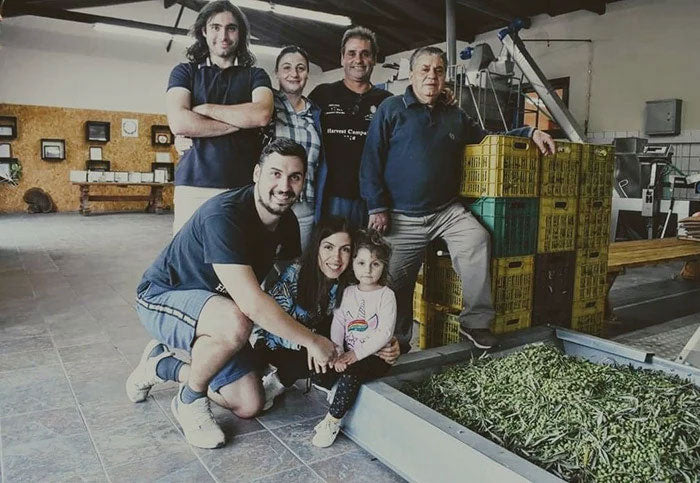
Every Autumn in Corfu, the new olive harvest begins around late September to early October, depending on the weather. For us, it’s one of the most exciting times of the year.

The Governor is produced from the Lianolia olive, harvested early while the fruit is still green and naturally rich in phenolic compounds. But once we produce the oil, we don't assume the new harvest will match the previous year.

We test it!

Samples are submitted for laboratory analysis. The Governor’s detailed phenolic analysis is carried out at the National and Kapodistrian University of Athens using a published analytical method.

The analysis looks beyond a single headline “polyphenol number”, measuring important individual phenolic compounds such as oleocanthal and oleacein, as well as tyrosol and hydroxytyrosol derivatives.

What do the numbers actually mean?

Our 2025 harvest Limited Edition recorded 1,316 mg/kg total phenols analysed. But this number is only part of the story. The analysis also tells us about the individual phenolic compounds naturally present within the oil that have been studied for their anti-inflammatory and antioxidant properties and have been associated with cardioprotective and neuroprotective activity.

Oleocanthal – 577 mg/kg
Oleocanthal is one of the most studied phenolic compounds in extra virgin olive oil and is associated with that distinctive peppery sensation at the back of the throat that you may notice when tasting The Governor.

Oleacein – 298 mg/kg
Another important naturally occurring phenolic compound in EVOO.
Together, oleocanthal and oleacein measured 875 mg/kg in our 2025 harvest.

Total tyrosol derivatives – 860 mg/kg
This represents the combined amount of the phenolic compounds measured in the analysis that are derived from tyrosol.

Total hydroxytyrosol derivatives – 456 mg/kg
These are the phenolic compounds measured that are derived from hydroxytyrosol. Hydroxytyrosol and its derivatives are particularly relevant because they form part of the basis of the authorised EU health claim for olive oil polyphenols.

Total phenols analysed – 1,316 mg/kg

What about the EU health claim?

“Olive oil polyphenols contribute to the protection of blood lipids from oxidative stress.”

The beneficial effect is obtained with a daily intake of 20g of olive oil, and the oil must contain at least 5mg of hydroxytyrosol and its derivatives per 20g.

For our 2025 Limited Edition, laboratory analysis found that 20g of the oil provides 26.31mg of hydroxytyrosol, tyrosol or their derivatives,  more than five times the 5mg threshold referenced.

Why does each harvest have different numbers?

Olive oil is a natural agricultural product, not a manufactured formula. The phenolic profile can vary from one harvest to another based on factors such as the olive variety, the growing season's weather conditions, harvest timing, and conditions at each stage of production.

Our 2024 Limited Edition, for example, recorded 1,800 mg/kg total polyphenols analysed, including 763 mg/kg oleocanthal and 558 mg/kg oleacein.

The 2025 harvest recorded 1,316 mg/kg total phenols analysed, with 577 mg/kg oleocanthal and 298 mg/kg oleacein.

That's exactly why we don't simply continue quoting a previous harvest's results. We analyse each new harvest and share the figures for that oil.

One number doesn't tell the whole story

Another important point when comparing high-polyphenol olive oils.

Polyphenols are only one part of understanding the quality of an extra virgin olive oil. Separate laboratory testing looks at important chemical markers that help assess the oil’s quality, freshness and oxidation.

Our 2025 harvest Limited Edition was independently analysed by the VELTIA Fats & Oils Laboratory in Athens in December 2025.

Free acidity – 0.23%
Free acidity is an important indicator of the olives' condition and how carefully the oil has been produced and handled. For extra virgin olive oil, the laboratory report gives an acceptance level of 0.8%. Our result was just 0.23%.

Peroxide value – 5.92 mEq O₂/kg
This measures primary oxidation. In simple terms, it indicates how much oxidation has begun in the oil. The laboratory's acceptance level is 20, while The Governor recorded 5.92.

K232 – 2.035
This is another measure associated with oxidation, particularly the early stages. The acceptance level is 2.50.

K270 – 0.175
This measurement helps identify secondary oxidation and other changes in the oil. The acceptance level of 0.22.

ΔK – −0.004
Another important part of the UV analysis used when assessing olive oil quality and authenticity. The acceptance is 0.01.

Together, these results give us a much broader picture of the oil than its polyphenol content alone. High phenolics are important to The Governor, but so too is the underlying quality of the extra virgin olive oil carrying them.

And what about taste?

Sensory quality is also fundamental to extra virgin olive oil. An EVOO should be free from recognised sensory defects and display positive characteristics associated with fresh olive fruit.

For The Governor, we know that its sensory character is well-known: its distinctive fruitiness, bitterness, and characteristic peppery finish are all part of the experience of a fresh, early-harvest EVOO.

As trained olive oil sommeliers, we also taste The Governor regularly, assessing its aroma, flavour, balance, and how its sensory profile develops over time.

And certified organic, too

The Governor is also certified organic by DIO, the Greek organic certification and inspection body.

Organic certification relates to how the olives are grown and the oil is produced, providing independent certification that the production meets the requirements for organic status.

So when we talk about the quality of The Governor, we're looking at much more than one impressive polyphenol number. We're looking at its phenolic profile, chemical quality, sensory characteristics and organic certification.

We'll be travelling to Corfu in October to take part in the harvest and taste the new-season Governor EVOO.

And once the new oil has been analysed and is ready to make its way to the UK, we'll share the new harvest results with you.

New harvest. New analysis. New numbers. Same commitment to knowing exactly what's inside every bottle.

★★★★★
I have been using The Governor evoo for 5 months now with my 7 year old daughter who is on the spectrum, since using it I have seen an increased calmness in her and her ability to sit still has improved. I put this down to it being the early harvest and having high polyphenols which help lower inflammation….. based on current research I believe most people would benefit from a daily dose of what I call liquid gold
Jacky
★★★★★
I started using this oil 3 months ago and am noticing the significant health benefits especially in my joints!Would highly recommend it as it tastes great and I don't even like olives!!!!
Mandy Johnson
★★★★★
It really is the Governor of olive oil!!!
Tom Kerridge Michelin-starred chef
★★★★★
I consider the Governor one of the best high phenolic oils Greece produces and always include in my tastings. Cannot think of a more caring and beautiful gift to yourself or a loved one!
Irini Tzortzoglou- Greek cook and winner of the MasterChef 2019 UK
★★★★★
This is the best olive oil we have ever had, it's far superior than any other we have tried, we won't be buying any other. We are on our 2nd bottle now and the added health benefits makes it even more appealing and the service is first class.
Jane Grime
★★★★★
I have bought many Extra Virgin Olive Oils from all over the world and IMHO the Governor Premium is the best of them all.......hands down.Everything from ordering, packaging and of course the quality is exceptional. Wonderful health benefits with this Olive Oil.
Bernand Donnelly

The Governor has been so far studied for...

The polyphenols in the Governor EVOO are measured by NMR - Nuclear Magnetic Resonance. NMR is very expensive to use but it is proven to be the most accurate way for producers to identify their olive oil as high phenolic olive oil.

The oleocanthal concentration in EVOO can vary considerably. This is due to several factors, including the variety of olive, geographical location of the olive trees, olive maturity when pressing, cultivation and production techniques. 


Research context: The Governor EVOO has been supplied for many academic studies investigating high-oleocanthal olive oil. Participation in research does not mean the product has been clinically proven to prevent, treat or cure disease.

  • Olive Compound Oleocanthal: A New Possible Treatment Approach for Aggressive Prostate Cancer - Published November 2025
  • High Polyphenol Extra Virgin Olive Oil and Metabolically Unhealthy Obesity: A Scoping Review of Preclinical Data and Clinical Trials - Published February 2025
  • The Olive Oil Phenolic S-(-)-Oleocanthal Suppresses Colorectal Cancer Progression and Recurrence by Modulating SMYD2-EZH2 and c-MET Activation - Published January 2025
  • Acute Antiplatelet Effects of an Oleocanthal-Rich Olive Oil in Type II Diabetic Patients: A Postprandial Study - Published May 2024
  • Consumption of Olive Oil and Diet Quality and Risk of Dementia-Related Death - Published May 2024
  • Extra virgin olive oil enhances the blood-brain barrier function in Mild Cognitive impairment - Published December 2022
  • Oleocanthal Attenuates Metastatic Castration-Resistant Prostate Cancer Progression and Recurrence by Targeting SMYD2 - Published July 2022
  • The effect of Dietary Intervention with high oleocanthal and oleacein olive oil in patients with early stage chronic Leukemia - Published 21 January 2022
  • Olive Polyphenols: Antioxidant and Anti-Inflammatory Properties - Published June 2021
  • Oleocanthal is inhibiting lung cancer – published 11 June 2020 
  • Safety Evaluation of single dose of Oleocanthal  – published 20th January 2020
  • Oleocanthal combine with lapatinib treatmentsynergized against HER 2 breast cancer – published 15th February 2020
  • Alzheimer and cancer cells at the ULM and hunter college of New York ( Cornel University)
  • Oleocanthal rich restores the blood – brain barrier – Accepted  12th June 2019
  • Hydroxytyrosol, Tyrosol and Derivatives and Their Potential Effects on Human Health - Published May 2019
  • Oleocanthal on its oral anti breast cancer activity – published  9th April 2019
  • Optimization of taste masked oleocanthal – 5 October 2019
  • Oleocanthal rich enhances donepezil effect by reducing amyloid b and toxicity of Alzheimer disease  – 8th may 2018
  • Olive oil intake is inversely related to cancer prevalence: a systematic review and a meta-analysis of 13800 patients and 23340 controls in 19 observational studies - Published July 2011
Scientific Advisors

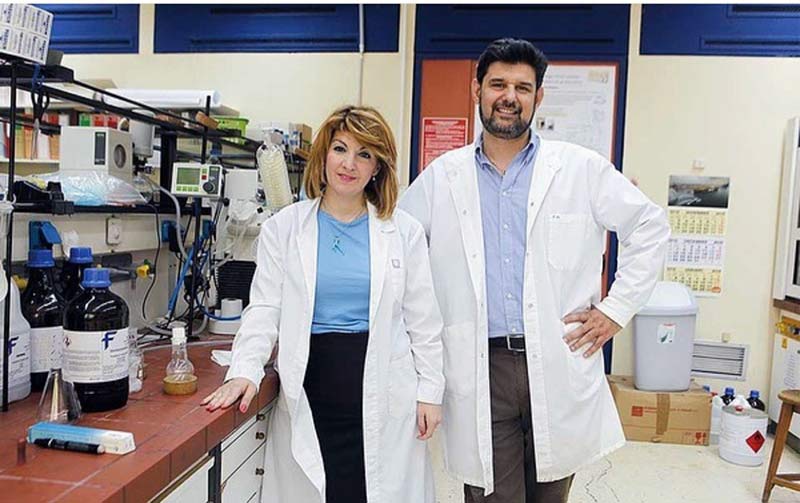
Dr. Prokopios Magiatis and Dr. Eleni Melliou are at the forefront of olive oil research. Dr. Magiatis is a co-founder and vice-president of the Oleocanthal International Society and co-founder of the World Olive Center for Health in Athens. Dr. Melliou is co-founder and general secretary of the Oleocanthal International Society and co-founder of the World Olive Centre for Health in Athens.

The World Olive Centre is a specialised organisation dedicated to the study of the health benefit’s of Olive oil. Its main objective is to provide support for clinical trials using high phenolic extra virgin olive oil.

Prokopios Magiatis research is focused on the isolation, chemical synthesis and bioactivity of natural products especially olive oil. He is an expert on the analyses and measurement of bioactive compounds like oleocanthal in olive oil. Dr. Eleni Melliou research is focused on the chemistry of natural products and particularly on isolation and structural identification of bioactive small molecules from foods with the use of chromatographic and spectroscopic methods.

“We can certify that The Governor is an extremely rare extra virgin olive oil that stands out from the usual oils. It is an oil highly recommended to all consumers looking for olive oil with enhanced properties for health protection”

 Prokopios Magiatis, Associate Professor – Athens University Faculty of Pharmacy